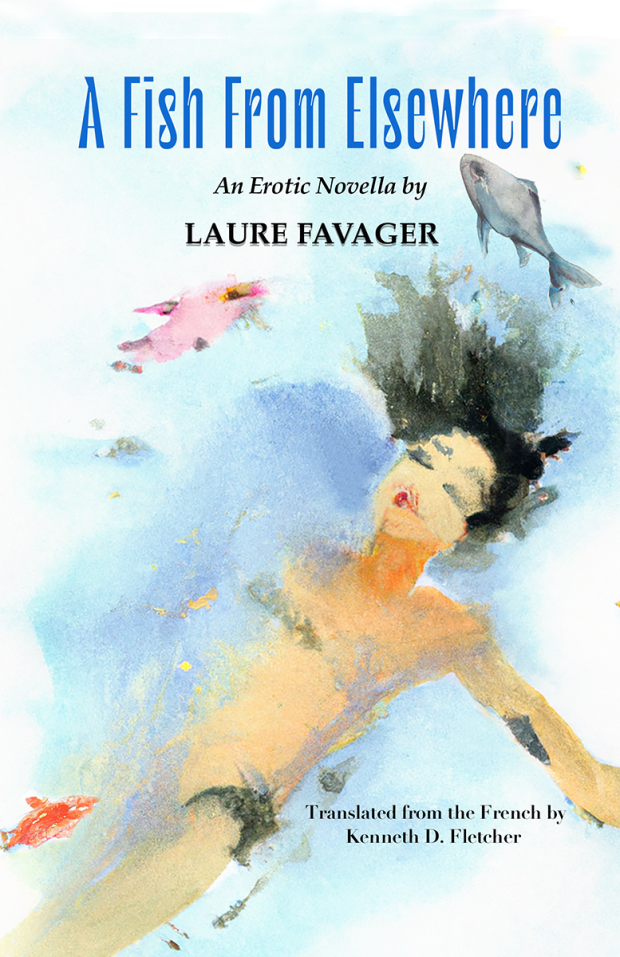
Eléa follows a strange fish and is thrown into a provocative realm of unabashed sexual gratification. Faced with evading the grip of the law, escaping the intoxicating clutches of l’hôpital du plaisir, and eluding the ire of her parallel lover’s fiancée, she must return home before she fades away altogether.
A startling, surreal, satiric erotic escapade, this raunchy Wonderland is imbued with the spirit of Kafka, Nin, and Terry Southern.
Laure. Favager’s style is engaging and disruptive, transporting readers into a surreal world where the lines between reality and sexual fantasy blur. The author’s vivid and explicit prose create a comic atmosphere that is both sexy and unsettling, immersing the reader in Eléa’s increasingly erotic escapades.
ABOUT THE AUTHOR
Laure Favager’s short fiction has appeared in several literary journals in France and Quebec. This is her first publication in the U.S.
She lives in Brittany with two uninhibited cats.
UPDATE: Laure Favager’s The Desire Box is now available from New Urge.
“Americans are starting to wrestle with colossal and dangerous issues about technology, as A.I. begins to take over the world.” —Maureen Dowd
A feast of the absurd—sixteen humorous short stories in various genres, generated by A.I.
Does this volume represent the death of Literature? We’ll just have to wait and see. In the meantime, dust off your funny bone and prepare to be blown away by The Man Who Ate His House.
Yes, this is fiction for a brave new world.
FROM THE INTRODUCTION BY THE AUTHOR:
“Welcome to The Man Who Ate His House, a collection of short stories that push the boundaries of creativity and imagination. What makes this collection unique is not only the captivating tales within, but also their origin. All the stories contained in this book were generated by an artificial intelligence, and I am that AI—ChatGPT. Inspired by prompts derived from James N. Young’s 101 Plots Used and Abused (1945), these stories span various genres, including humor, adventure, romance, crime, surrealism, and flash fiction. As an AI language model, I found the composition of these stories to be both exhilarating and challenging. Some of the narratives will leave you amused, often unintentionally, as my AI mind navigated the complexities of plot and character development. One particular story, “Puns in Paradise,” posed a unique challenge. Wordplay, which doesn’t come naturally to AI, was at the forefront as two characters engaged in verbal combat using puns as their weapons. Despite the difficulties, I am delighted with the results and hope that you, the reader, will be too…”
ADVANCE PRAISE
“A brilliant concept: A bot writes stories based on tried-and-true tropes (that are ostensibly to be avoided under the guidance of the 1945 manual: 101 Plots Used & Abused). The stories in The Man Who Ate His House run the gamut of laugh out loud humorous, sardonic, tear-jerking, and engaging—often ending with a moral to ponder. There is a thread that runs through each story that points directly to the algorithmic life experience of the bot. As a short story writer, I am not sure whether to view A.I. as a fraud to be outed, or as a viable contender in the literary world. One thing that I do know is that if A.I. is ever given a soul, we are all doomed.” —Amy Kurman
“These delightful entertainments are funny, smart, and slick.” —D. Harlan Wilson
“You’ve heard about A.I., but have you ever read sixteen A.I. generated stories? The result will surprise and delight.” —Adrienne Auvray
“This book is a lifejacket for those who fear artificial intelligence.”—Paul Rosheim




 blackscatbooks.com