We don’t like to play favorites and with a list of some 200 titles we can’t. But we thought you might like to know which titles have been the most popular. So here is a list of our Top Ten. All are in print, so if you missed one just click on its cover.
10 Oulipo Pornobongo (2016)
9 Le Scat Noir Encyclopedie et Dictionaire (2020)
8 Captain Cap, Alphonse Allais (2013)
7 Le Scat Noir Encyclopedia (2017)
6 Critics & My Talking Dog, Stefan Themerson (2019)
Originally released in a limited edition, this vastly expanded version of Black Scat’s Merde à La Belle Époque brings gastric laughter to all of America. This hilarious scatological anthology features verses, stories, songs, and playlets by some of Paris’s most inventive and eccentric comic writers of the period. It includes the exceedingly rare Le Journal des Merdeux — an illustrated broadside devoted entirely to merde. Indeed, upon its publication in 1882, The Little Shits’ Journal was seized by the police and banned. Merde!
This lovely, deodorized paperback edition, designed by Norman Conquest, has been exquisitely compiled, deftly translated, and introduced by Doug Skinner, and includes his erudite and witty notes on the texts.
Return to those raucous years of La Belle Époque when French “shiterature” scandalized Paris.
Alphonse Allais (1854-1905) was France’s greatest humorist. His elegance, scientific curiosity, preoccupation with language and logic, wordplay and flashes of cruelty inspired Alfred Jarry, as well as succeeding generations of Surrealists, Pataphysicians, and Oulipians.THE SQUADRON’S UMBRELLA collects 39 of Allais’s funniest stories — many originally published in the legendary paper LE CHAT NOIR, written for the Bohemians of Montmartre. Included are such classic pranks on the reader as “The Templars” (in which the plot becomes secondary to remembering the hero’s name) and “Like the Others” (in which a lover’s attempts to emulate his rivals lead to fatal but inevitable results.) These tales have amused and inspired generations, and now English readers can enjoy the master absurdist at his best. As the author promises, this book contains no umbrella and the subject of squadrons is “not even broached.”
This sublime translation by Doug Skinner is one of our most popular titles.
About the Author ALPHONSE ALLAIS (1854 – 1905) began his career in Paris during the Belle Epoque. He was particularly active at the legendary cabaret Le Chat Noir, where he wrote for and edited the weekly paper. He quickly became known for his deadpan wit and inexhaustible imagination. Among other things, he also exhibited some of the first monochromatic pictures (such as his all-white “First Communion of Chlorotic Girls in the Snow” in 1883) and composed the first silent piece of music: “Funeral March for the Obsequies of a Deaf Man” (1884). Throughout most of his life, he contributed columns several times a week to LE JOURNAL and LE SOURIRE. These pieces were collected into twelve volumes, which he called his “Anthumous Works,” between 1892 and 1902. He also published a collection of his monochromes, ALBUM PRIMO-AVRILESQUE, in 1897, and a novel, L’AFFAIRE BLAIREAU, in 1899, as well as a few plays. His later years were troubled by debt, a bad marriage, and heavy drinking; he died at 59. He was a crucial influence on Alfred Jarry, as well as on the Surrealists: Breton included him in his ANTHOLOGY OF BLACK HUMOR, and Duchamp was reading him on the day he died. Allais’s fascination with wordplay, puns, and holorhymes led Oulipo to call him an “anticipatory plagiarist”; the Pataphysical College dubbed him their “Patacessor.” His books have remained in print in France, and the Académie Alphonse Allais has awarded a literary prize in his honor since 1954.
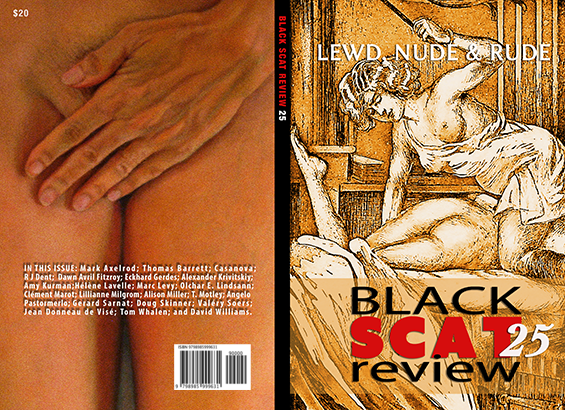
The lovely “Lewd, Nude & Rude” issue of BLACK SCAT REVIEW has stormed the beach!
As you’ve come to expect, the issue is filled with Sublime Art & Literature — innovative fiction, eye-popping graphics, works in translation, and spicy absurdities. Featuring 131 pages packed with an international cast of contributors: Mark Axelrod; Thomas Barrett; Sebastian Bennett; Giacomo Girolamo Casanova; Norman Conquest; R J Dent; Dawn Avril Fitzroy; Eckhard Gerdes; Alexander Krivitskiy; Amy Kurman; Hélène Lavelle; Marc Levy; Olchar E. Lindsann; Clément Marot; Lilianne Milgrom; Alison Miller; T. Motley; Angelo Pastormerlo; GerardSarnat; Doug Skinner; Valéry Soers; Jean Donneau de Visé; Gregory Wallace; Tom Whalen; and David Williams.
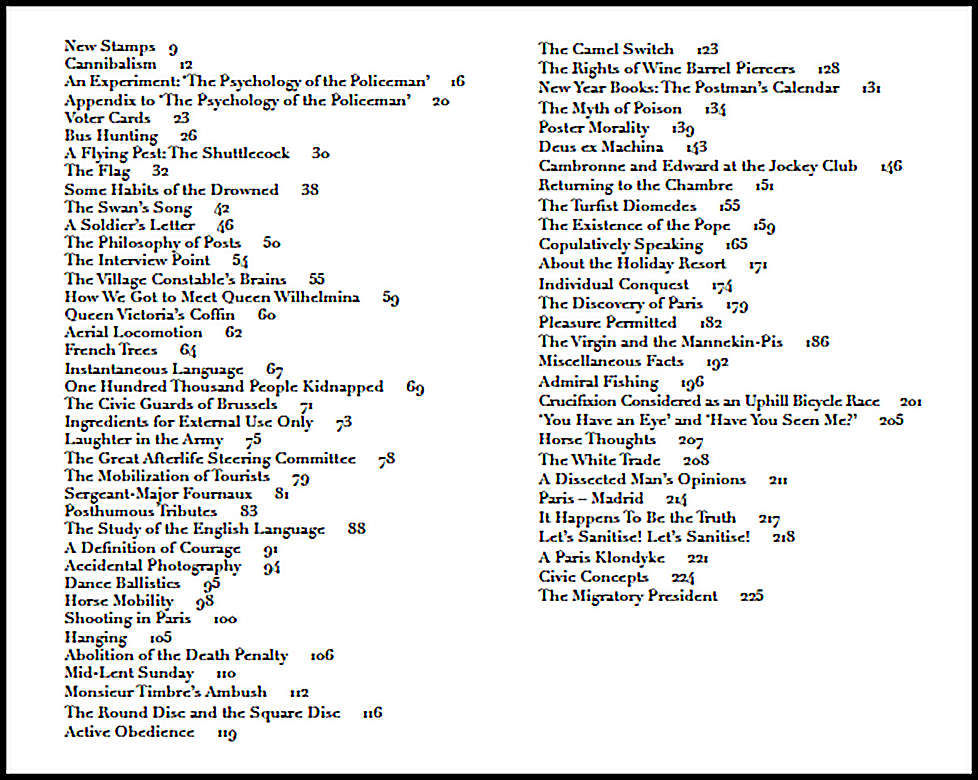
Alfred Jarry spent his brief and turbulent life experimenting with genres of fiction. In his last few years, he created a new fictional form: the absurdist speculative essay. R J Dent’s new English translation of Speculations contains 68 of Jarry’s essays, originally printed between 1901 and 1904 as a series, ‘Spéculations’, in the French journal Le Revue Blanche.
In Jarry’s darkly comic collection of surrealist and satirical prose pieces, the renowned author deploys his characteristic satirical eye and dark humor to devastating effect. These essays range in tone from the wildly comic to the deeply tragic and cover a diversity of subjects, ranging from French Trees to Cannibalism. For Jarry, nothing is sacred; everything is worthy material for his surreal satire; the Passion is presented as a sporting event; buses are the prey of big game hunters, and even the Queen is licked from behind.
A series of sly investigations into fin de siècle France that reads like a beautiful & bloody handful of paper cuts, splintered essays that turn authority on its head in sharp bursts of wicked logic, R J Dent elegantly capturing Jarry’s iconoclastic spirit, his scandalous heart. —Matthew Kinlin
There’s a story that Jarry carried a loaded revolver around with him (said revolver Picasso obtained after his death, and took it with him on night walks around Paris). A woman living near Jarry complained to him about the danger of his gun-toting to her children. To which Jarry said, “If that should ever happen, ma-da-me, we should ourselves be happy to get new ones with you.” If you can appreciate as demented a sentiment as that, you can have a hundred more reading Speculations, in a delightful translation from R. J. Dent. —Conor Hultman, The Local Voice
Edible contents:
SPECULATIONS Alfred Jarry Translated by R J Dent Paper; 5.06 x 7.81 inches; 235 pp., $15.95 ISBN 13 979-8-9859996-1-7
The master absurdist is back in LOVES, DELIGHTS, & ORGANS(Amours, délices et orgues). This madcap collection of stories, fables, hoaxes and jokes is pataphysical fun for the literate layabout. This first English translation features 47 sublime textual specimens — PLUS six additional stories, a rousing introduction, and enlightening notes on the translation by Allaisian scholar Doug Skinner. If you’ve yet to discover the bizarre world of Alphonse Allais, you’re in for a treat.
“Allais comes across as a very modern writer, and his work as an experimental enterprise which is exemplary in many ways… it is also quite possible to invoke such writers as Raymond Queneau, Italo Calvino, and Jorge Luis Borges.” —Jean-Marie Defays
ABOUT THE AUTHOR
Alphonse Allais was born in the Northern port town of Honfleur, in Calvados, on October 20, 1854. He was, therefore, born in the same town as Erik Satie, and on the same day as Arthur Rimbaud. His father was a pharmacist, and sent young Alphonse to Paris to learn the family trade. Young Alphonse mostly cut his classes, and steeped himself in the absinthe-soaked delights of bohemian Montmartre.
He joined the hard-drinking literary coterie the Hydropathes, accompanied the celebrated prankster Sapeck (Eugène Bataille) on his misadventures, submitted monochromatic pictures to the proto-Dada exhibitions of the Incohérents, and wrote squibs for various ephemeral papers. He became adept, in both word and deed, at the unique Parisian discipline of fumisme: a heady mix of hoaxing, provocation, and iconoclasm, all delivered with deadpan aplomb. Although he’d abandoned chemistry, his scientific credentials gave him a perspective (and persona) that set him apart from the more febrile poets around him. He was often likened to an English schoolmaster, with a placid demeanor that made his wild ideas all the more startling. [from the introduction by Doug Skinner]
Step right up! The “Funhouse” issue is now available. It walks, it talks, it crawls on its belly like a reptile . . .
Featuring astounding art and fiction by Mark Axelrod; Tom Barrett; David Berger; Norman Conquest; R J Dent; Muriel Falak; Eckhard Gerdes; Richard Gessner; Alfred Jarry; Richard Kostelanetz; Amy Kurman; Mantis; Kate Meyer-Currey; Bob McNeil; Lillianne Milgrom; Lance Olsen; Paul Rosheim; Doug Skinner; Nile Southern; and Jim Yoakum.
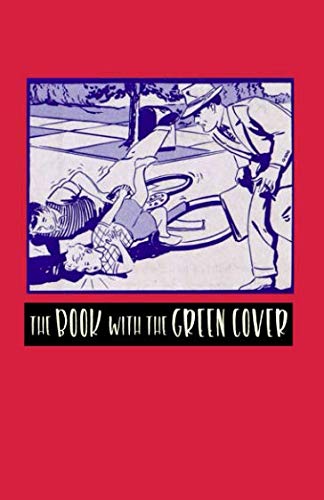
THE BOOK WITH THE GREEN COVER. A collection of Norman Conquest‘s verbo-visual vices, including posters, charts, mock book & magazine covers, rectified readymades, typographic diversions, found novels, and other detritus. Illustrated with color plates and silverware.







 blackscatbooks.com