MIND YOUR MANNERS

Pierre Louÿs wrote this scandalous and salacious satirical work in 1917, yet it wasn’t published until 1926, after his death. Originally titled Manuel de civilité pour les petites filles à l’usage des maisons d’éducation, it was the author’s first published erotic work—issued anonymously in Paris, with no date nor publisher’s imprint.

A Handbook of Manners for the Good Girls of France parodies the educational handbooks of the day, as well as popular guides to etiquette. But unlike the author’s elegantly sensual ouvre, including Les Chansons de Bilitis and Aphrodite: mœurs antiques, this is Louÿs’ most radical and subversive book — aimed directly at middle-class puritanism, mocking the hypocrisy and complacency of the Belle Époque. It attacks religion and social norms with equal vigor— a sharp slap in the face of censors and prudes.

It’s also very funny.
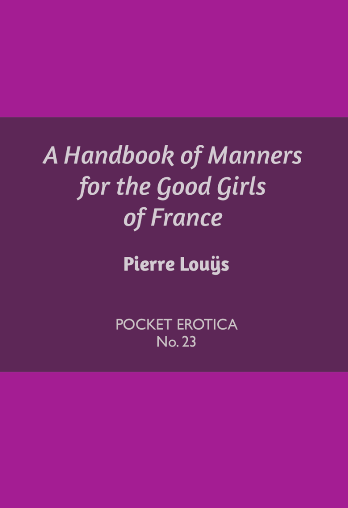
A HANDBOOK OF MANNERS FOR THE GOOD GIRLS OF FRANCE
Pierre Louÿs
Translated from the French by Lono Taggers
Paperback; 70 pp., illustrated; $12
Pocket Erotica #23 / New Urge
ISBN 13 978-1-7379430-6-8


ABOUT THE AUTHOR

Pierre Louÿs, poet and novelist, was born in Belgium but spent his life in France. He is best known for his erotic works, many with sapphic and classical themes. His most popular titles include Aphrodite: mœurs antiques; Trois Filles de leur mère; Le Trophée de vulves légendaires; Poésies érotiques; La Femme et le pantin; and Les Chansons de Bilitis. His contributions to French erotic literature remain unequaled.

START THE NEW YEAR WITH A BLAST OF LAUGHTER

Comic artist Doug Skinner aims his poisoned pen at 52 works of classic literature—from The Iliad to Ubu Roi—whittling them down to four cartoon panels. It’s a constraint worthy of Georges Perec — an OuBapoian*collection of black humor guaranteed to set funny bones on fire. 

Shorten the Classics is brilliant — albeit abbreviated — fun. If you want to read the classics, but don’t have time, this book is for you.

Grab a copy before it’s too late!

Shorten the Classics
Doug Skinner
Absurdist Texts & Documents #43
paperback; 116 pp.;
5.06 x 7.81 inches; $14
ISBN 978-1-7373711-3-7


*Oubapo: Ouvroir de bande dessinée potentielle: ”workshop of potential comic book art”)

Watch Out! — Here Comes Jean-Fucque!

A Born-Again Surrealist Classic

Inspired by Louis Aragon’s obscure surrealist text, this new adaptation by R J Dent proudly presents… [insert drumroll] the one and only, Jean-Fucque Le Cocque, a large, disembodied penis and his Parisian adventures — his satisfactory encounters with female passengers on the Metro, his small room in a hotel frequented by prostitutes, and his reason for buying a hat. (Mon dieu!)

Merci beaucoup!

THE PLAY’S THE THING

Harold Jaffe‘s new collection, Strange Fruit & Other Plays, challenges the reader to confront an America awash in racism, hatred, and violence. With cunning precision, Jaffe employs 20th century icons of art, cinema, music, & literature, to illuminate the dark place we find ourselves in today.

Here are nine diverse and innovative one-act plays, featuring Billie Holiday & Lester Young;  Antonin Artaud & Georges Bataille; Marilyn Monroe & Marlon Brando; Samuel Beckett; condemned prisoners in Texas making their final statement before execution; Israelis & Palestinians in life-or-death dialogue; Charles Manson unleashed; Jimi Hendrix, Janis Joplin & Jim Morrison burning it at both ends; & the potently satirical “Splish Splash,” exploring gender discord.


Harold Jaffe is the author of 30 novels, short fiction collections, essays, and plays. His recent books include Porn-anti-Porn and BRUT: Writings on Art & Artists. He is editor-in-chief of Fiction International.


A TREAT FOR HALLOWEEN

There is a veritable army of zombie books out there but nothing remotely like this one. This obscure novel — THE ZOMBIE OF GREAT PERU — is a masterpiece of avant-garde weirdness — written by one Pierre-Corneille Blessebois, “the Casanova of the 17th century,” as an act of literary revenge. It is not simply vengeful, but it’s the first work in world literature to use the word “zombie” and stands as an early example of bizarre black humor. This outrageous relic—unearthed & translated from the French by the incomparable Doug Skinner—is the novel’s first appearance in English and features a preface by the great Guillaume Apollinaire.


ALLAIS’S CABARET — HOORAY!

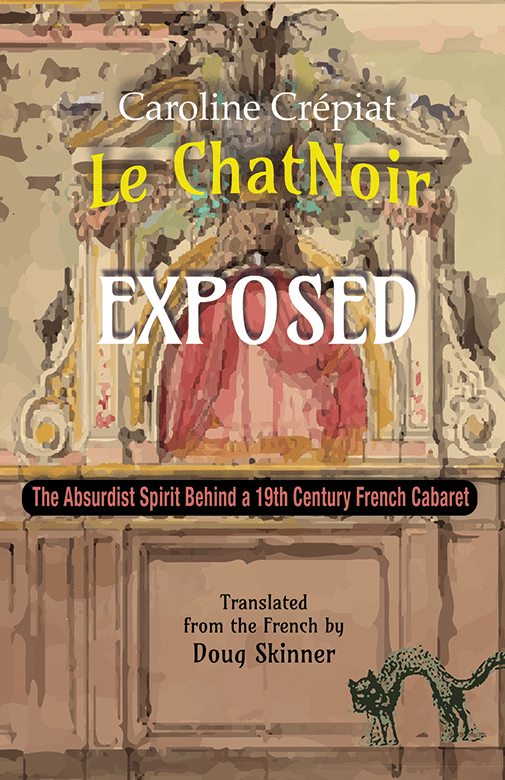
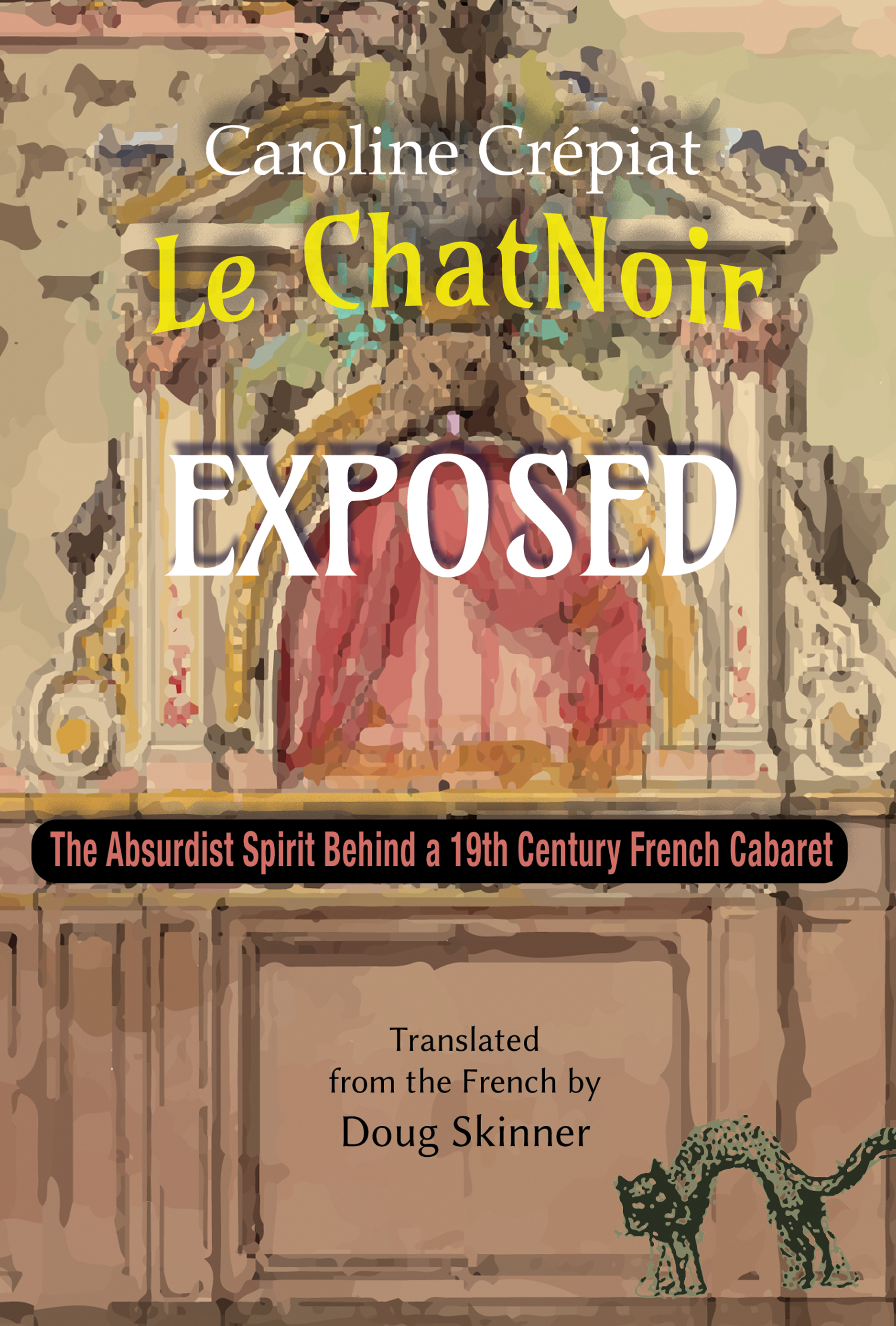
It’s a rare event when we publish a work of nonfiction, but this book is dear to our hard-hearted heart. This extraordinary work of scholarship exposes the liveliest fin-de-siècle bohemian cabaret and journal in Paris.

Le Chat Noir was a playground for painters, writers, poets, pranksters, and musicians, all gleefully demolishing the standards of art and good taste. Caroline Crépiat examines such eccentric personalities as Paul Verlaine, Alphonse Allais, Marie Krysinska, Maurice Mac-Nab, and Charles Cros, and analyzes their treatment of money, women, translation, humor, sex, disease, and scatology, with generous samplings of the original texts. A masterful look at a rich and colorful legend of the avant-garde!

Le Chat Noir Exposed
Caroline Crépiat
Translated by Doug Skinner
trade paper, 182 pp.,
Illustrated; $15.95
ISBN: 978-1-7356159-6-7

ABOUT THE AUTHOR

Caroline Crépiat‘s main area of research focuses on French fin-de-siècle periodicals, humor, and language. Her articles have been published widely in France. She co-edited Masks, bodies, languages — Figures in contemporary erotic poetry (Classiques Garnier Editions: 2017). She lives in Dijon with two chats noirs.

DO THE MATH

FIRST ENGLISH TRANSLATION

The incomparable humorist is in his prime here, spinning out dark fantasies on cycling in Ancient Rome, the taste of tears, the economic advantages of germ warfare, God’s dislike of Christmas, and the proper chemicals for a chaperone’s chamberpot. The intrepid Captain Cap pitches his bizarre inventions over cocktails, and Allais sends back notes from his travels to North America and Southern France. At 65 stories, this collection is Allais’s largest—PLUS two extra stories by Allais and two by Octave Mirbeau, on the pressing issue of ambulatory vegetables.

We’re tickled and thrilled to bring you the 12th title in our Alphonse Allais Collection: 2 + 2 = 5 —translated, with an introduction and notes on the text, by the absurdly gifted Doug Skinner.

Alphonse is in his prime here, spinning out dark fantasies on cycling in Ancient Rome, the taste of tears, the economic advantages of germ warfare, God’s dislike of Christmas, and the proper chemicals for a chaperone’s chamberpot. The intrepid Captain Cap pitches his bizarre inventions over cocktails, and Allais sends back notes from his travels to North America and Southern France. At 65 stories, this collection is the humorist’s largest—PLUS two extra stories by Allais and two by Octave Mirbeau, on the pressing issue of ambulatory vegetables. What does it all add up to? . . . Hilarity!

2 + 2 = 5
Alphonse Allais
Translated from the French by Doug Skinner
Original cover painting by Lilianne Milgrom
Trade paperback; 289 pp., $14.95

Buy Now

CLICK ON YOUR FLAG TO ORDER OUTSIDE THE USA

About the Author
ALPHONSE ALLAIS (1854-1905) was a peerless French humorist, celebrated posthumously by the Surrealists for his elegant style and disturbing imagination. In addition to composing absurdist texts for newspapers such as Le Chat Noir and Le Journal, he experimented with holorhymes, invented conceptual art, and created the earliest known example of a silent musical composition: Funeral March for the Obsequies of a Deaf Man (1884). Truly ahead of his time (as well as our own), Allais is needed now more than ever. His mischievous work remains fresh, funny, and always surprising.

Other books by Allais you’ll enjoy. . .