
Captain Cap: His Adventures, His Ideas, His Drinks
Selected Plays of Alphonse Allais

“…her valleys are like Eden, her hills like Lebanon, her springs as Pisgah, and her rivers as Jordan; that she is a paradise of pleasure and garden of delight.”

This satirical travelogue was first published in England 1740. With Swiftian wit, it describes the female sexual anatomy as a metaphor of geography and natural history. This lovely guidebook is a must-have for the armchair adventurer, as well as timid explorers who dream of female parts unknown. Students of natural history and budding geographers will discover many hidden delights within these pages.
“The Arabian Geographical Lexicographer cited by Schultens in his book observes that the exact limits of the vast country of Merryland are entirely unknown, the greatest traveller never having been able to discover its utmost bounds; and whoever attempts such a discovery, may properly be said to grope in the dark.”


Featuring: Mark Axelrod, Tom Barrett, Angie Brenner, Ken Brown, Norman Conquest, Caroline Crépiat, Haley Dahl, Farewell Debut, Paul Forristal, Ryan Forsythe, Penelope Goddard, Jean-Jacques Grandville, Simon Hanes, Rhys Hughes, Alexei Kalinchuk, KKUURRTT, Rick Krieger, David Moscovich, Jason E. Rolfe, Paul Rosheim, Bob Rucker, Thaddeus Rutkowski, Doug Skinner, Terry Southern, Yuriy Tarnawsky, Tom Whalen, and Carla M. Wilson.
It’s the perfect antidote for summer lockdown — and no mask required.

back cover


 The Pope’s Mustard-Maker (Le Moutardier du pape) was the last work that Alfred Jarry finished, a few months before his death in 1907. It is a bawdy three-act farce loosely based on the medieval legend of Pope Joan, with a huge cast and lively songs bubbling with rhymes and wordplay.
Readers who know Jarry only from Ubu or his novels may be surprised that he wrote operettas, but his are fully Jarryesque, with his usual gusto for smutty jokes, legend, folklore, puns, wild invention, and popular theater. In his hands, Pope Joan becomes Jane, who runs off with her lover and disguises herself as pope. How will she pass inspection on the slotted chair? What will she do when her husband shows up? And has there ever been another production number celebrating the spiritual virtues of enemas?
A sublime translation from the French by Doug Skinner.

The Pope’s Mustard-Maker (Le Moutardier du pape) was the last work that Alfred Jarry finished, a few months before his death in 1907. It is a bawdy three-act farce loosely based on the medieval legend of Pope Joan, with a huge cast and lively songs bubbling with rhymes and wordplay.
Readers who know Jarry only from Ubu or his novels may be surprised that he wrote operettas, but his are fully Jarryesque, with his usual gusto for smutty jokes, legend, folklore, puns, wild invention, and popular theater. In his hands, Pope Joan becomes Jane, who runs off with her lover and disguises herself as pope. How will she pass inspection on the slotted chair? What will she do when her husband shows up? And has there ever been another production number celebrating the spiritual virtues of enemas?
This is the first translation of this major work; it also includes an introduction and notes by the translator, Doug Skinner.
All hail The Pope’s Mustard-Maker!

Doug Skinner‘s delightfully absurd musical instruments appeared each month in the pages of our journal, Le Scat Noir. The artist has now rounded up all these drawings (along with previously unpublished specimens) for his new collection Instrumentarium: A Book of Curious Musical Instruments. Even if you’re tone deaf, this book will have you humming along, snapping your fingers, tapping your feet and laughing out loud.
Jam-packed with 180 drawings in blaring black and white, this trade paperback edition is available worldwide on Amazon for only $12.95.


Have you seen The Book With the Green Cover?
It’s a collection of verbo-visual treats by Norman Conquest. It features posters, charts, mock book & magazine covers, rectified readymades, typographic diversions, found novels, and other detritus. It’s profusely illustrated with color plates and silverware.
Available now, just in time for summer. Be the first kid on the block to take this coffee table chapbook to the beach!

“Charles Cros was a being miraculously gifted in every way, a strangely personal and charming poet, a true scientist, a disconcerting fantasist.” —Alphonse Allais

Charles Cros and Émile Goudeau were quintessential Bohemian poets of the 1880s. Cros also experimented with the phonograph and color photography; Goudeau founded the Hydropathes, who met to declaim poetry while not drinking water. Cros and Goudeau’s only collaboration was a series of five exuberant stories published in 1880, which satirized such hot topics as divorce and capital punishment with bawdy humor and wild flights of fancy. All five stories are included here, plus four solo stories by Cros that complete the series, translated and annotated by Doug Skinner.
“Émile Goudeau was a fine man, and he had a lot of talent, an original talent as flavorsome as wine.” —Maurice Donnay
“Amiable smuttiness.” —Émile Zola
These dense and nutty gems will surprise you!
CLICK HERE to order UPSIDE-DOWN STORIES — the 35th title in our seminal Absurdist Texts & Documents series.

LE CHAT NOIR was one of the liveliest avant-garde papers in 19th century Paris. Published by the legendary cabaret, it delivered a weekly blast of anarchism, pranks, Decadent poetry, and black humor by such luminaries as Alphonse Allais, Charles Cros, and Paul Verlaine. It was also famous for its cartoons. Here are 101 of them: the poetic fantasies of Adolphe Willette, the slapstick animals of Théophile Steinlen, the military sketches of Caran d’Ache, the bawdy gags of Döes and Fernand Fau, and much more. With an introduction, translations, and notes by Doug Skinner.
101 CARTOONS FROM LE CHAT NOIR
Early Comics from Bohemian Paris
Compiled & Translated by Doug Skinner
124 pp., large trade paper edition; $14.95

from 101 CARTOONS FROM LE CHAT NOIR
Available Worldwide on Amazon
On August 17 1911—seven years before Max Ernst took up scissors and paste to create his early Dada art—WHAT A LIFE! was published in London by Methuen & Co. The authors, Edward Verrall Lucas (humorist & travel writer) and George Morrow ( illustrator and regular contributor to Punch), produced their satirical pictorial autobiography using illustrations cut from the pages of Whiteley’s General Catalogue. This inspired act of vandalism was a precursor to many works of avant-garde collage art and satire.
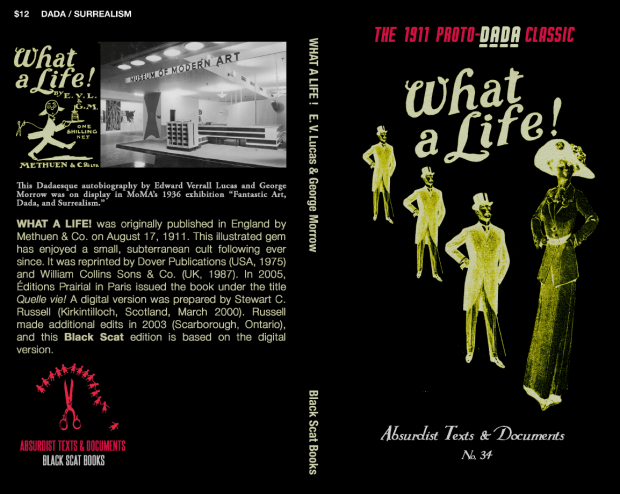
Long out of print in the U.S., Black Scat is proud to bring this proto-Dada classic back to life as #34 in our Absurdist Texts & Documents series.
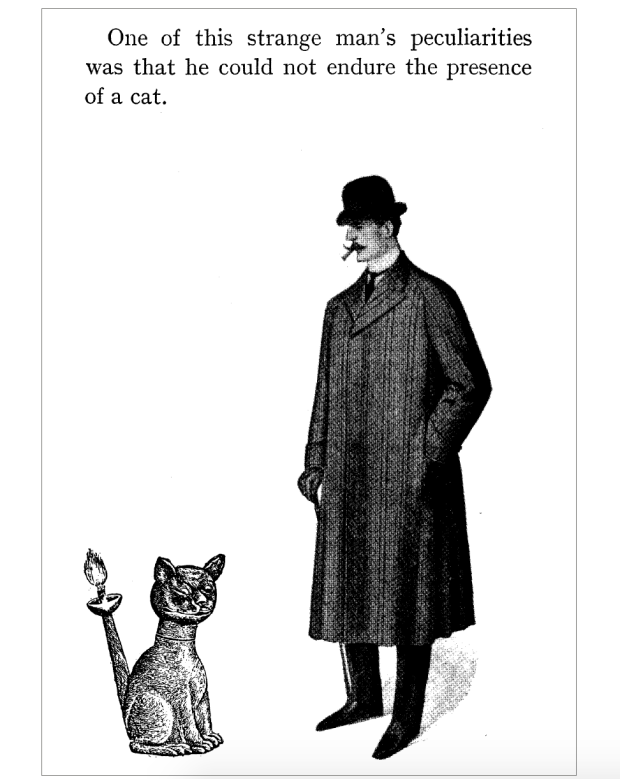
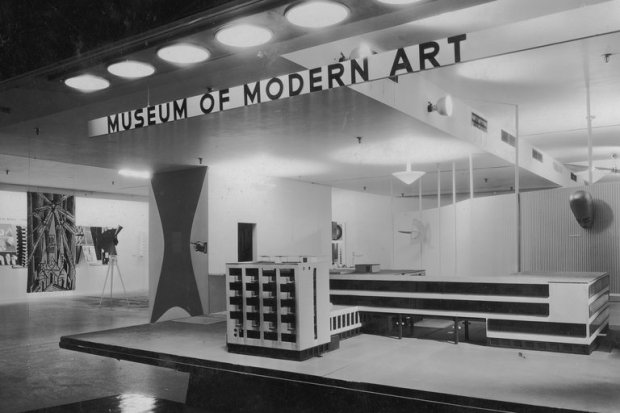
WHAT A LIFE ! was exhibited at MoMA’s 1936 “Fantastic Art, Dada, and Surrealism” show.
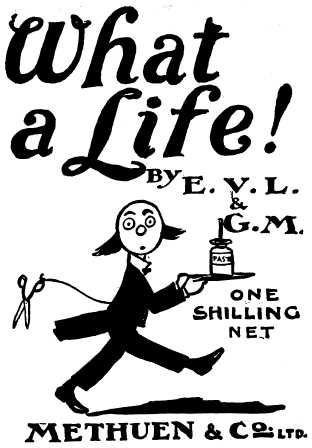
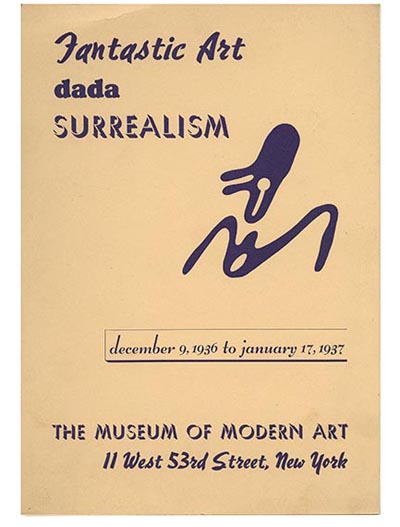
WHAT A LIFE! seems to have made little impression, either in England or in France, even though it has the remarkable distinction of being illustrated solely by collages drawn from the catalogue of a large department store in London (Whiteley’s), and therefore of being—as much by the images as by the text that they comment on—one of the first manifestations of that spirit we call “modern.” —Raymond Queneau, Bâtons, chiffres et lettres (1950)

