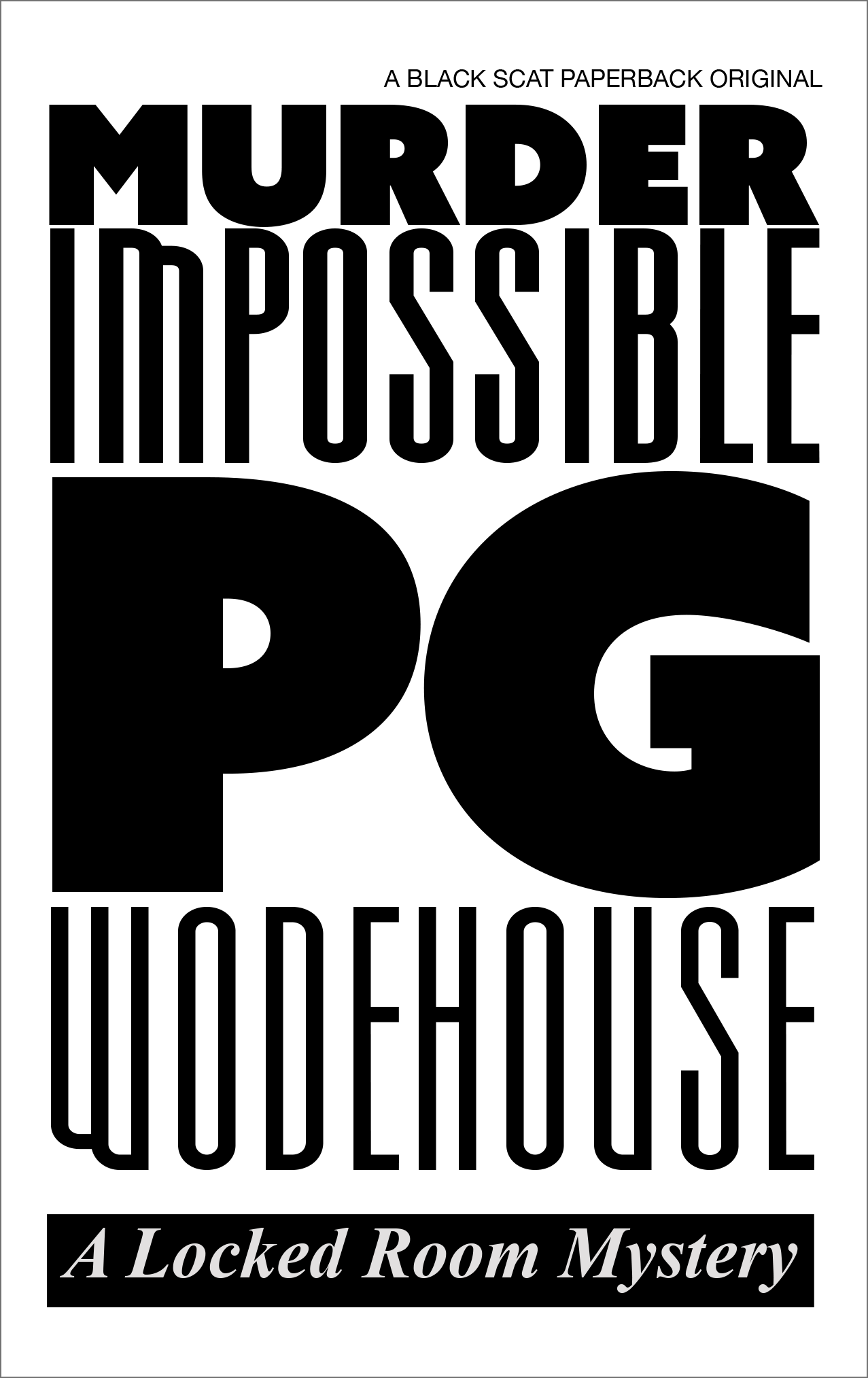
A new cover design by Norman Conquest for this Black Scat classic. A dead body is discovered in a boarding-house in Southampton, England. It looks like murder, but whodunnit? — howdunnit? — the room was locked! Devised by one of the world’s greatest humorists, this witty, impossible crime offers all the pleasures a mystery-lover could wish for.
“This eerily beautiful picturebook is at once nostalgic, futique, and a testimony to our evolving cyborg reality. Art-goers new and old will not be able to look away.” –D. Harlan Wilson
We’re excited to release this sublime, large format edition,AFTER HOPPER, featuring over fifty full color collages by artist Norman Conquest.
Here’s a peek:
AFTER HOPPER is, in part, an homage to American Painter Edward Hopper, with original, surreal, and ironic images to haunt your imagination. Using both traditional cut-and-paste collage techniques, as well as cutting edge AI tools, Norman Conquest paints a fresh absurdist portrait of the past and present.
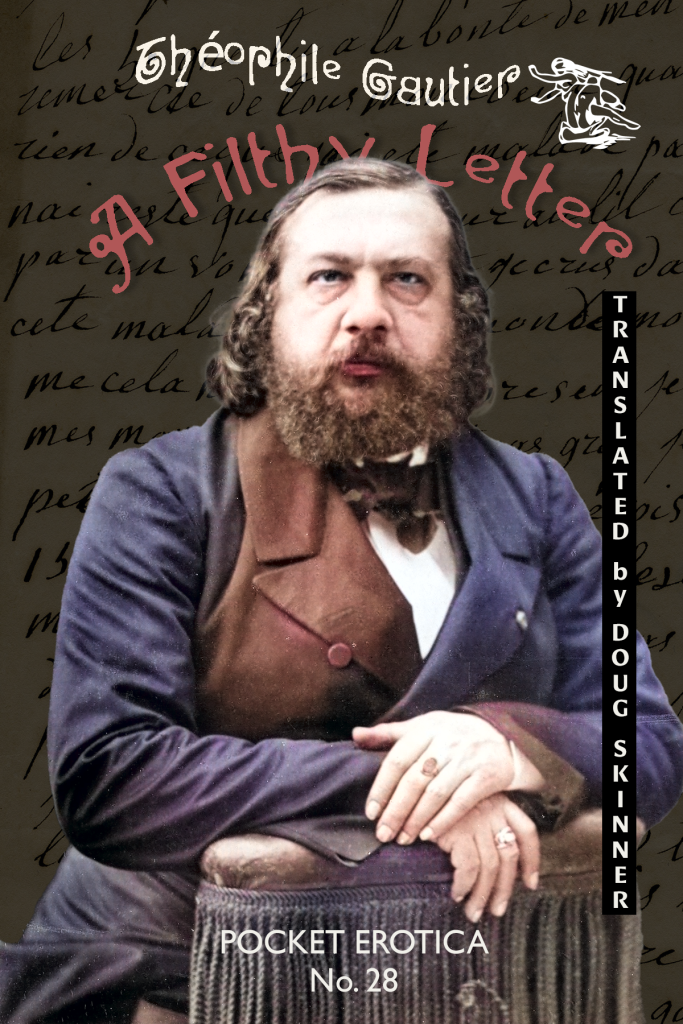
This scandalous little work appeared in France under the title “Letter to La Présidente.”
Théophile Gautier (1811-1872) was a novelist and poet, one of the champions of Romanticism. In 1850, he and his friend Louis de Cormenin visited Italy, so he wrote his friends back home a letter about their adventures. The result was a rollicking “filthy letter,” packed with jokes, slang, obsolete words, literary allusions, puns, alliterations, neologisms, Spoonerisms, verses, outrageous metaphors, and Rabelaisian lists. It was published privately in 1890, and became a clandestine classic.
A FILTHY LETTER Théophile Gautier Translated from the French by Doug Skinner, with an introduction & notes on the text Pocket Erotica Series #28 74 pp., 4 x 6 inches; 979-8-9894330-7-0
We proudly present the 15th volume in our grand Alphonse Allais Collection. Here is France’s greatest humorist in top form. This first English translation of WE ARE NOT SHEEP features 44 witty tales, PLUS four extra stories, translated by Allaisian scholar Doug Skinner, with his erudite introduction and complete notes on the text.
If you’re looking for laughter—(and, hell, who isn’t?)—this delightful edition is a gift that will long be remembered.
ABOUT THE AUTHOR
ALPHONSE ALLAIS (1854-1905) was a peerless French humorist, celebrated posthumously by the Surrealists for his elegant style and disturbing imagination. In addition to composing absurdist texts for newspapers such as LE CHAT NOIR and LE JOURNAL, he experimented with holorhymes, pioneered conceptual art, and created the earliest known example of a silent musical composition: FUNERAL MARCH FOR THE OBSEQUIES OF A DEAF MAN (1884). Ahead of his time (as well as ours), Allais is needed now more than ever. His mischievous work remains fresh, funny, and always surprising.
ABOUT THE TRANSLATOR
DOUG SKINNER has contributed to Black Scat Review, The Fortean Times, Strange Attractor Journal, Fate, Weirdo, Nickelodeon, Cabinet, and other fine publications. Black Scat Books has published several books of his stories, cartoons, and songs, as well as translations of Alphonse Allais, Charles Cros, Alfred Jarry, Pierre-Corneille Blessebois, Luigi Russolo, Caroline Crépiat, and Corinne Taunay. Other translations include Three Dreams (Giovanni Battista Nazari, Magnum Opus Hermetic Sourceworks), The Cocktail Hour (Marcel Requien and Lucien Farnoux, with Gaylor Olivier, Corps Reviver), and Principles of Cerebral Mechanics (Charles Cros, Wakefield Press).
He has written music for several dance companies; his scores for actor/clown Bill Irwin include The Regard of Flight, The Courtroom, The Regard Evening, and The Harlequin Studies.
TV and movie appearances include Great Performances, Martin Mull’s Talent Takes a Holiday, Mike’s Talent Show, Ed, Crocodile Dundee II, several of George Kuchar’s videos, and a smattering of commercials.
His albums That Regrettable Weekend, It All Went Pfft, and An Afternoon in the Arboretum are available on Bandcamp.
In this brief video, artist-writer-musician Doug Skinner talks about his collaboration with Derek Pell and AI on a collection of short stories: THE MAN WHO ATE HIS HOUSE.
The only encyclopedias you’ll ever need—the Triad of Truth & Human Knowledge—only from Black Scat Books. Why spend hundreds of dollars and fill your library shelves when three inexpensive, illustrated paperbacks are all you need. No fuss, no mess. Get smart and you can know it all for less than a tank of gas.
Click on the titles below and order today before the world burns to a crisp.
First came the groundbreaking Le Scat Noir Encyclopaedia in 2017. Three years later we launched the pataphysical classic Le Scat Noir Encyclopédie et Dictionnaire de la Pataphysique, des arts et du savoir humain: Volume Deux (in English of course). Today we’re pleased to announce a handy reference destined to become a bestseller among scholars and sex fiends: A Concise Encyclopedia of Human Sexuality — a conveniently sized paperback – perfect for beach orgies or boring church sermons. It’s a volume you’ll want to keep within reach in the bedroom or bath. And it’s guaranteed to answer all your questions. (If not, it’s packed with illustrations to ogle and drool over.)
The Encyclopedia features this distinguished panel of 23 experts of various sexual proclivities:
• Tim Anderson • Mark Axelrod • Tom Barrett • Cathy Bryant • Lenny Cavallaro • Norman Conquest • Rémy Dambron • R J Dent • Eckhard Gerdes • Jesse Glass • Malcolm Green • Rhys Hughes
• Victor Hugo • Amy Kurman • Michael Leigh • David Moscovich • Opal Louis Nations • Peter Payack • Derek Pell • Sourav Roy • Jessica Ross-Dreher • Paul Rosheim • Doug Skinner • Tom Whalen
Alphonse Allais (1854-1905) was France’s greatest humorist. His elegance, scientific curiosity, preoccupation with language and logic, wordplay and flashes of cruelty inspired Alfred Jarry, as well as succeeding generations of Surrealists, Pataphysicians, and Oulipians.THE SQUADRON’S UMBRELLA collects 39 of Allais’s funniest stories — many originally published in the legendary paper LE CHAT NOIR, written for the Bohemians of Montmartre. Included are such classic pranks on the reader as “The Templars” (in which the plot becomes secondary to remembering the hero’s name) and “Like the Others” (in which a lover’s attempts to emulate his rivals lead to fatal but inevitable results.) These tales have amused and inspired generations, and now English readers can enjoy the master absurdist at his best. As the author promises, this book contains no umbrella and the subject of squadrons is “not even broached.”
This sublime translation by Doug Skinner is one of our most popular titles.
About the Author ALPHONSE ALLAIS (1854 – 1905) began his career in Paris during the Belle Epoque. He was particularly active at the legendary cabaret Le Chat Noir, where he wrote for and edited the weekly paper. He quickly became known for his deadpan wit and inexhaustible imagination. Among other things, he also exhibited some of the first monochromatic pictures (such as his all-white “First Communion of Chlorotic Girls in the Snow” in 1883) and composed the first silent piece of music: “Funeral March for the Obsequies of a Deaf Man” (1884). Throughout most of his life, he contributed columns several times a week to LE JOURNAL and LE SOURIRE. These pieces were collected into twelve volumes, which he called his “Anthumous Works,” between 1892 and 1902. He also published a collection of his monochromes, ALBUM PRIMO-AVRILESQUE, in 1897, and a novel, L’AFFAIRE BLAIREAU, in 1899, as well as a few plays. His later years were troubled by debt, a bad marriage, and heavy drinking; he died at 59. He was a crucial influence on Alfred Jarry, as well as on the Surrealists: Breton included him in his ANTHOLOGY OF BLACK HUMOR, and Duchamp was reading him on the day he died. Allais’s fascination with wordplay, puns, and holorhymes led Oulipo to call him an “anticipatory plagiarist”; the Pataphysical College dubbed him their “Patacessor.” His books have remained in print in France, and the Académie Alphonse Allais has awarded a literary prize in his honor since 1954.








 blackscatbooks.com