
OVER 200 TITLES PUBLISHED, OVER 160 TITLES IN PRINT.
OVER 200 TITLES PUBLISHED, OVER 160 TITLES IN PRINT.

T Y P O: Journal of Lettrism, Surrealist Semantics, & Constrained Design
Our second issue is packed with treats from around the world…
Alien alphabets
Prismatic subdivisions
Principles of double-talk
Post-Neoist portraits
Desiring specimens
Asemic architecture
Paul Éluard poetry
Titular typography
Surrealist trivia
Italian eye candy
Curlicues in review
Generic Sheet Music
Jarry on the English language
Historical filler text translations
& much more
Pierre Albert-Birot; Guillaume Apollinaire; Mark Axelrod-Sokolov; Tom Barrett; Allan Bealy; Miggs Burroughs; Jahan Cader; Janina Ciezadlo; Norman Conquest; Farewell Debut; R J Dent; Karen Eliot; Paul Éluard; Paul Forristal; Ryan Forsythe; Jesse Glass; Rick Henry; Rhys Hughes; Rory Hughes; Alfred Jarry; Richard Koman; Márton Koppány; Amy Kurman; Peter F. Murphy; Pata-No UN LTD; Gaston de Pawlowski; Derek Pell; Harry Polkinhorn; Tom Prime; Jason E. Rolfe; Ded Rysel; Doug Skinner; Giovanni Antonio Tagliente; Félix Vallotton; Andrew C. Wenaus; Adolphe Willette; Carla Wilson;William Wordsworth.
Trade paperback; 152 pp., $14.95
ISBN 979-8-9869224-5-4

“There is another world and it is in this one.”
—Paul Éluard

Paul Éluard’s Capital of Pain (Capitale de la douleur ) appeared in 1926 and established his reputation as the preeminent French surrealist poet.
Éluard’s surrealist vision is illuminated by a painter’s eye; his imagery includes light, surfaces, reflections, sunlight, mirrors, halos and radiance, although he deploys them to evoke suffering, despair and emptiness. Details of the poet’s personal life are found in this collection’s two-part central poem, “In the Flame of the Whip.” Each line crackles with irrepressible power – resembling the criss-cross lash marks left on human flesh by the whip.
Both sides of the mirror are exposed in Capital of Pain – the reflective surface and the tain on its reverse side. The mirror is, of course, Éluard himself, because, as the collection’s title suggests, it reveals the poet’s private anguish and personal agony.
Paul Éluard was a dedicated and devoted surrealist who championed the juxtaposition of distinct elements and the play of dualities which give surrealist poetry its profundity and vitality. As readers, we are fortunate he chose to expose the mysterious and hidden aspects of his life with lyrical brilliance.
“…it is gratifying to find a collection of Paul Éluard’s poetry translated into English by R. J. Dent, and published (with a glorious cover!) by Black Scat Books – one of the last publishers to keep the flag of Olympia, Éditions Jean-Jacques Pauvert and Grove Press flying, with new writing as well as classics of Surrealism, the Absurd, Dada, Erotica and ‘Pataphysics…. All in all, Dent, a poet and novelist in his own right, demonstrates clearly the truth of the old maxim, it takes a poet to translate a poet.” —Reese Saxment, Surrealerpool
CLICK HERE to read the complete review.
Capital of Pain
Paul Éluard
Translated from the French by R J Dent
paperback; 132 pp., $14

Anna Karina holding Éluard’s Capitale de la douleur in
Godard’s classic film Alphaville.

Featuring astounding art and fiction by Mark Axelrod; Tom Barrett; David Berger; Norman Conquest; R J Dent; Muriel Falak; Eckhard Gerdes; Richard Gessner; Alfred Jarry; Richard Kostelanetz; Amy Kurman; Mantis; Kate Meyer-Currey; Bob McNeil; Lillianne Milgrom; Lance Olsen; Paul Rosheim; Doug Skinner; Nile Southern; and Jim Yoakum.

Ladies and gents, grab your copy now!


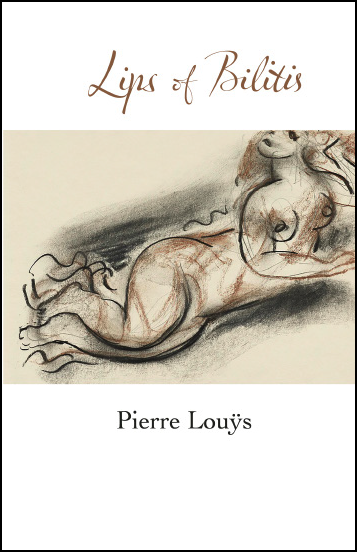
Originally published in 1894 under the title Les Chansons de Bilitis, this provocative collection of poetry was purportedly translated from the Ancient Greek but was, in fact, the product of the imagination of French poet Pierre Louÿs.
A faux contemporary of the poet Sappho, Bilitis offers the modern reader these seductive, sensual, and unashamed celebrations of female sexuality.
A beautiful book for the bedside.

LIPS OF BILITIS
Pierre Louÿs
Translated by Lono Taggers
Illustrations by Willy Pogány
Paperback; 186 pp., $14
New Urge Editions / Black Scat Books
ISBN 978-1-7379430-5-1

Charles Baudelaire’s decadent erotic poems caused a scandal when they first appeared in 1857. Both author and publisher were prosecuted for unveiling works that were “an insult to public decency,” and six poems in the collection were suppressed. These so-called indecent works (banned in France until 1949) were: Lesbos; Condemned Women: Delphine and Hippolyta; Lethe; To One Who Is Too Happy; Jewels; and The Metamorphosis of the Vampire— and all are included in this Pocket Erotica edition,
plus 20 more.
Selected Erotic Poems
Charles Baudelaire
Translated from the French by R J Dent
Pocket Erotica No. 21, New Urge Editions
paper chapbook; 64 pp., $12
ISBN 978-1737943037

A special reprint edition of BLACK SCAT REVIEW #1 is now available.

Originally published in 2012, the issue sold out quickly and has long been out of print. It features John Crombie’s translation of “Like Mother” by Alphonse Allais; a hilarious accusatory text by the legendary Canadian absurdist Crad Kilodney; collage art from the UK by Michael Leigh; Elizabeth Archer’s revealing interview with British humorist Samantha Memi; experimental comic art by Florence Bocherel; a rare comic drama by Pierre Henri Cami translated by Doug Skinner; bizarre poems from Portugal’s Pedro Carolino; and astounding short fiction by Samantha Memi, Yuriy Tarnawsky and Tom Whalen. (EDITOR’S NOTE: The original cover photograph by S. N. Jacobson has been censored to allow its display on Amazon.)
BLACK SCAT REVIEW (Number One)
edited by Norman Conquest
paperback; illustrated; full color;
ISBN 979-8450666396
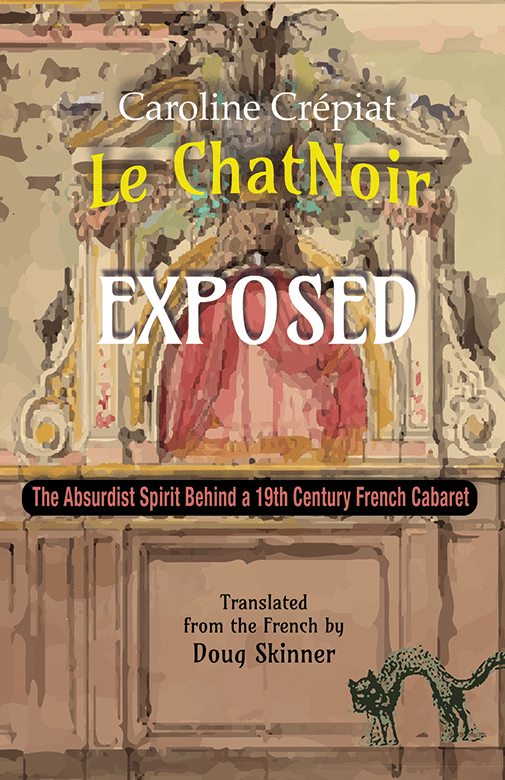
It’s a rare event when we publish a work of nonfiction, but this book is dear to our hard-hearted heart. This extraordinary work of scholarship exposes the liveliest fin-de-siècle bohemian cabaret and journal in Paris.
Le Chat Noir was a playground for painters, writers, poets, pranksters, and musicians, all gleefully demolishing the standards of art and good taste. Caroline Crépiat examines such eccentric personalities as Paul Verlaine, Alphonse Allais, Marie Krysinska, Maurice Mac-Nab, and Charles Cros, and analyzes their treatment of money, women, translation, humor, sex, disease, and scatology, with generous samplings of the original texts. A masterful look at a rich and colorful legend of the avant-garde!
Le Chat Noir Exposed
Caroline Crépiat
Translated by Doug Skinner
trade paper, 182 pp.,
Illustrated; $15.95
ISBN: 978-1-7356159-6-7

ABOUT THE AUTHOR

Caroline Crépiat‘s main area of research focuses on French fin-de-siècle periodicals, humor, and language. Her articles have been published widely in France. She co-edited Masks, bodies, languages — Figures in contemporary erotic poetry (Classiques Garnier Editions: 2017). She lives in Dijon with two chats noirs.

“You must travel… I can’t travel… I’ll travel”
We are all armchair travelers now. The question is: Where do we go?
If you’re looking for answers, let 28 imaginative writers & artists from around the globe take you places you’ve never been. Find your getaway in BLACK SCAT REVIEW 21 — The Travel Issue.
FEATURING: Alphonse Allais, Robert James Cross, Farewell Debut, S. C. Delaney, John Oliver Hodges, Rhys Hughes, Harold Jaffe, E.E. King, Olchar E. Lindsann, Charles J. March III, Carmelo Militano, Opal Louis Nations, Peter Payack, Persefone, Roger Pheuquewell, Agnès Potier, Collin J. Rae, Jason E. Rolfe, Paul Rosheim, Charles de Rosières, Doug Skinner, Kristine Snodgrass, Ben Stoltzfus, Corinne Taunay, Ed Taylor, Michel Vachey, Tom Whalen, D. Harlan Wilson.
John Pitaro has written an illuminating review of our SELECTED POEMS OF EDWARD D. WOOD, JR.
(Absurdist Texts & Documents #26).
It appears in the current issue of SENSITIVE SKIN magazine.
Here’s a snippet:
“Within this mix of emotional upheaval and splintered symbolism, Wood closes the chapbook with a particularly notable piece, one indicating his inclusion in both the literary underground and the LGBTQ community as well as the sorrowful reality of unsuccessful arts careers. It is dubbed “Howl” (page 25) and opens with a sharp, satiric awareness of Ginsberg:
I saw the best flicks of my generation destroyed/by critics/ranting hysterical mutants/
Dragging directors in drag through the mud like/blood-thirsty bullies
Here, Wood deems himself “the angel-headed genius in the orange neon dusk of Hollywood”, and observes his audience both laughing at and cheering him in the cinema before
They staggered off into the sunset strip/
Leapt off the Hollywood sign into the bliss of the curvaceous cult-womb/
That wrapped them forever in its loin-lit angoric embrace “
CLICK HERE TO READ THE FULL REVIEW

CLICK HERE to buy the book and weep with laughter. Inspired satire, guaranteed.
 blackscatbooks.com